How To Make Easy Cabbage Kimchi
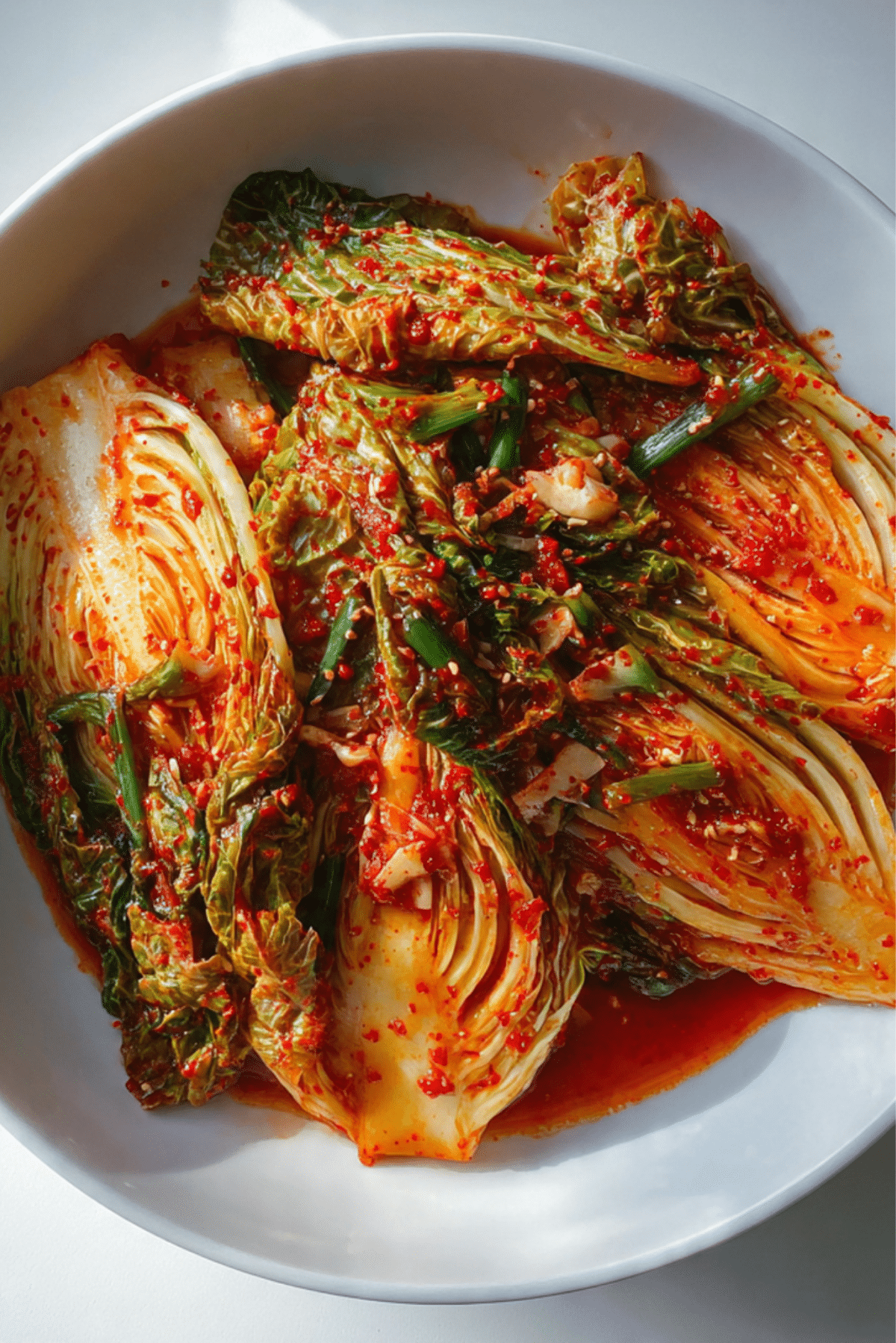
There’s something magical about the moment you open a jar of homemade cabbage kimchi. The aroma hits first — pungent, garlicky, and deeply savory with that sharp tang of fermentation waiting to dance on your taste buds. The vibrant red hue from gochugaru clings to every crisp fold of napa cabbage, and the balance of heat, salt, and sourness makes it an irresistible sidekick to just about any dish. Trust me, once you make it yourself, you’ll never go back to store-bought.
Behind the Recipe
I still remember the first time I made kimchi with a Korean friend’s family. Their kitchen smelled like garlic and chili, and the entire table was filled with bowls of vegetables, spices, and brining cabbage. There was a rhythm to the way they prepared it — like a family tradition passed down from generation to generation. Making kimchi felt less like a recipe and more like a celebration of flavor. And the best part? It was way easier than I expected.
Recipe Origin or Trivia
Kimchi has been a cornerstone of Korean cuisine for centuries. Traditionally fermented in clay pots underground, cabbage kimchi — known as “baechu kimchi” — is a staple on Korean tables. It’s not just a condiment. It’s part of daily life, part of the culture, and even part of the language. There are over 100 varieties of kimchi, but this classic version made with napa cabbage, garlic, ginger, scallions, and gochugaru remains the most beloved.
Why You’ll Love How To Make Easy Cabbage Kimchi
Whether you’re a fermentation newbie or a seasoned food experimenter, this recipe has something for everyone.
Versatile: Serve it with rice, tuck it into a sandwich, stir it into stews, or enjoy it on its own.
Budget-Friendly: A big batch uses just a few basic veggies and pantry staples.
Quick and Easy: Active prep takes less than 30 minutes. Let time do the rest.
Customizable: Adjust the heat, salt, or add radish or carrots to make it your own.
Crowd-Pleasing: It’s bold, flavorful, and impresses every time.
Make-Ahead Friendly: Fermentation improves flavor, so it gets better with age.
Great for Leftovers: Keeps for weeks in the fridge and tastes amazing cold or hot.
Chef’s Pro Tips for Perfect Results
There’s a bit of science and a lot of flavor packed into this jar of goodness. Here’s how to make it just right.
- Salt the cabbage properly: Don’t rush this step. The salt draws out water and starts the preservation process.
- Use gloves when mixing: Gochugaru can stain and irritate your skin.
- Taste before jarring: Adjust salt, sweetness, or spice before sealing it up.
- Leave room in the jar: Kimchi bubbles as it ferments. Overfilling leads to messy explosions.
- Let it ferment in stages: Start at room temp for 1–2 days, then move to the fridge for slower, deeper fermentation.
Kitchen Tools You’ll Need
You won’t need much to get started, and you probably already have most of it.
Large mixing bowl: For salting and mixing the cabbage.
Colander: To rinse the cabbage after salting.
Gloves: To protect your hands when mixing the spicy paste.
Cutting board and knife: For prepping the cabbage, garlic, and scallions.
Glass jar or airtight container: For storing and fermenting the kimchi.
Ingredients in How To Make Easy Cabbage Kimchi
This ingredient list brings the heat, the tang, and that unmistakable kimchi funk. It’s a harmony of spice and crunch.
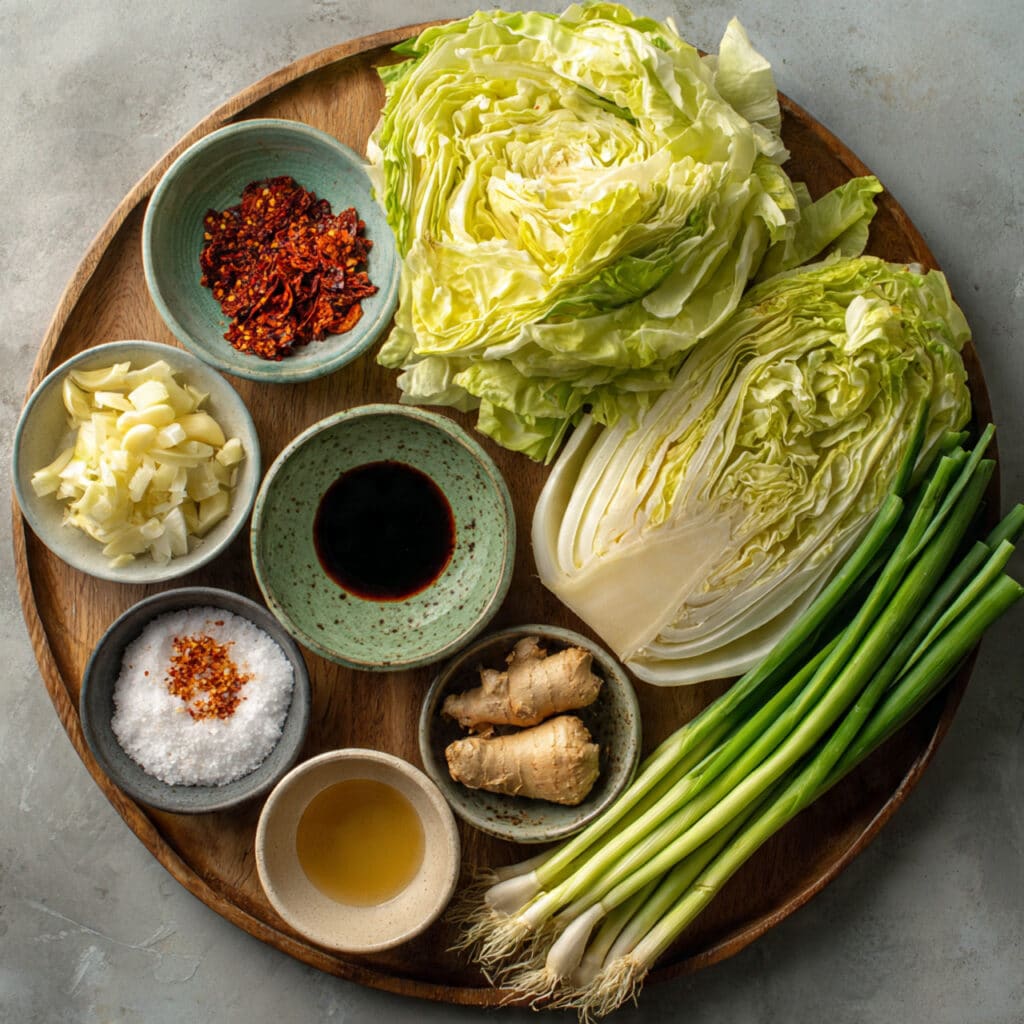
- Napa Cabbage: 1 large head, chopped into 2-inch pieces. This is the star of the show, providing a tender, crisp texture.
- Kosher Salt: 1/4 cup, used to draw out moisture and start fermentation.
- Garlic: 6 cloves, finely minced. Adds pungent depth and aroma.
- Fresh Ginger: 2 tablespoons, grated. Brings warmth and brightness.
- Fish Sauce: 2 tablespoons. Adds umami and deep savory flavor.
- Korean Red Pepper Flakes (Gochugaru): 1/4 cup. The heart of that spicy kick and signature color.
- Sugar: 1 tablespoon. Balances the salt and spice with a hint of sweetness.
- Scallions: 4, cut into 1-inch pieces. Adds fresh, peppery crunch.
- Water: As needed for rinsing and soaking the cabbage.
Ingredient Substitutions
Sometimes, you’ve got to work with what you have. Here’s how to keep the flavor alive.
Fish Sauce: Soy sauce or tamari (for vegan version).
Gochugaru: Crushed red pepper flakes (use less, as they’re spicier).
Sugar: Honey or maple syrup.
Napa Cabbage: Green cabbage (texture will be a bit firmer).
Scallions: Chives or finely sliced leeks.
Ingredient Spotlight
Gochugaru: This Korean red pepper flake is what gives kimchi its signature color and flavor. It’s fruity, smoky, and perfectly spicy without overwhelming the dish.
Napa Cabbage: Softer and more delicate than regular green cabbage, it absorbs the spicy brine beautifully while keeping its signature crunch.
Instructions for Making How To Make Easy Cabbage Kimchi
Making kimchi is a joyful mess. It’s hands-on, spicy, and incredibly satisfying. Here are the steps to guide your delicious journey.
- Preheat Your Equipment:
No heat needed here, but make sure all your tools are clean and dry before you begin. - Combine Ingredients:
Chop the napa cabbage into large bite-sized pieces. Place in a bowl and sprinkle evenly with kosher salt. Toss well and let sit for 1–2 hours, tossing occasionally, until the cabbage softens and releases water. - Prepare Your Cooking Vessel:
While the cabbage is resting, mix the garlic, ginger, fish sauce, sugar, and gochugaru in a separate bowl to form a thick red paste. - Assemble the Dish:
Rinse the salted cabbage thoroughly under cold water 2–3 times. Drain well. Add scallions and the spicy paste to the cabbage. Put on gloves and massage everything together until all pieces are evenly coated. - Cook to Perfection:
No cooking needed, but fermentation is where the magic happens. Pack the kimchi tightly into a jar, pressing down to eliminate air bubbles. Leave about an inch of space at the top. - Finishing Touches:
Seal the jar and leave it at room temperature for 1–2 days out of direct sunlight. Then refrigerate and let it ferment further for at least 5 days before eating. - Serve and Enjoy:
Scoop some out whenever the craving hits. It gets tangier over time, and that’s a good thing.
Texture & Flavor Secrets
Great kimchi hits your mouth with layers. First, the crunch of perfectly salted cabbage. Then the slow burn of gochugaru. Underneath, a funky, garlicky tang from the fermentation process. It’s sour, spicy, salty, and sweet — a flavor symphony that only improves over time.
Cooking Tips & Tricks
Little adjustments can make a big difference in flavor and texture.
- Let the cabbage sit the full 2 hours with salt for the best crunch.
- Always use clean, dry utensils when scooping kimchi to avoid contamination.
- Store your jar on a plate during fermentation in case it bubbles over.
- Label your jar with the date you made it so you can track fermentation time.
What to Avoid
Mistakes can happen, but they’re easy to fix.
- Using table salt: It often has additives that affect fermentation. Stick to kosher or sea salt.
- Under-salting the cabbage: It’ll turn soggy and spoil faster.
- Sealing the jar too tight during room-temp fermentation: Gases need space to escape. Loosen the lid slightly if needed.
- Skipping the rinse: Too much salt left on cabbage will overpower the flavor.
Nutrition Facts
Servings: 10
Calories per serving: 25
Note: These are approximate values.
Preparation Time
Prep Time: 25 minutes
Cook Time: 0 minutes
Total Time: 2 hours (including salting and resting)
Make-Ahead and Storage Tips
Kimchi was built for storing. It’s what makes it so genius. After making a batch, it continues to ferment and improve over time. Store it in the fridge in a tightly sealed jar. It’s best after 5–7 days, but stays good for several weeks, sometimes months. Just use clean utensils every time you dip in. And if you want to prep ahead, you can mix the paste and cut the veggies a day before assembly.
How to Serve How To Make Easy Cabbage Kimchi
This little jar of flavor can go just about anywhere. Serve it with a steaming bowl of rice, tuck it into a grilled cheese for a tangy kick, pile it on burgers, or stir it into stews like kimchi jjigae. You can even mix it into scrambled eggs for a spicy twist.
Creative Leftover Transformations
Have extra kimchi? Here’s how to use it up in fun new ways.
- Kimchi Fried Rice: Sauté with day-old rice and a splash of soy sauce.
- Kimchi Pancakes: Mix with flour and water and pan-fry.
- Kimchi Grilled Cheese: Tangy, spicy, cheesy bliss.
- Kimchi Soup: Add it to broth with tofu and noodles.
Additional Tips
- Use freshly fermented kimchi if you want a milder flavor.
- Older kimchi works best for cooking as it’s more tangy and rich.
- Always store in glass or ceramic, never metal containers.
- Want it less spicy? Use less gochugaru or add shredded carrot to mellow the heat.
Make It a Showstopper
When serving, place your kimchi in a clean ceramic bowl, sprinkle with sesame seeds, and top with a few scallion slices. That pop of green and the glossy red paste will look irresistible on any table.
Variations to Try
- Radish Kimchi (Kkakdugi): Cube daikon and follow the same steps.
- Vegan Kimchi: Skip fish sauce and use tamari or miso paste.
- Spicy Kimchi: Add extra gochugaru or a chopped fresh chili.
- Garlic-Lovers Version: Double the garlic for a bigger punch.
- Mild Kimchi: Add grated pear or apple to balance the heat.
FAQ’s
1. How long does homemade kimchi last?
Homemade kimchi can last up to 3 months in the fridge if stored properly.
2. Can I eat kimchi right away?
You can, but the flavor improves after a few days of fermentation.
3. What does kimchi taste like?
It’s spicy, sour, salty, garlicky, and umami-rich.
4. Why is my kimchi bubbling?
That’s fermentation at work — totally normal and a good sign.
5. Can I freeze kimchi?
It’s not recommended. Freezing alters the texture and flavor.
6. Is kimchi healthy?
Yes. It’s rich in probiotics, vitamins, and fiber.
7. What if I don’t have gochugaru?
Use crushed red pepper flakes in small amounts.
8. Why did my kimchi go soft?
Over-salting or not enough drainage can cause sogginess.
9. Can I reuse the kimchi liquid?
Yes. Use it in soups, sauces, or as a marinade base.
10. Can I reduce the smell?
Keep it sealed tightly and place the jar inside a second container if needed.
Conclusion
There’s something powerful about making your own kimchi. It’s more than just a side dish — it’s an experience, a burst of flavor, and a connection to tradition. Whether you enjoy it fresh or aged, this easy cabbage kimchi will become a staple in your kitchen. Give it a try, and let your taste buds take a delicious dive into Korean culinary magic.
Print
How To Make Easy Cabbage Kimchi
- Total Time: 2 hours (including salting and resting)
- Yield: 10 servings 1x
- Diet: Vegan
Description
A vibrant and spicy Korean fermented cabbage dish, this easy cabbage kimchi is packed with flavor, texture, and healthy probiotics. Perfect as a side, condiment, or star ingredient.
Ingredients
- 1 large napa cabbage, chopped into 2-inch pieces
- 1/4 cup kosher salt
- 6 garlic cloves, finely minced
- 2 tablespoons fresh ginger, grated
- 2 tablespoons fish sauce
- 1/4 cup Korean red pepper flakes (gochugaru)
- 1 tablespoon sugar
- 4 scallions, cut into 1-inch pieces
- Water, as needed for soaking and rinsing
Instructions
- Chop the napa cabbage and place in a large bowl. Sprinkle with kosher salt and toss well. Let sit for 1–2 hours, tossing occasionally, until softened and water has been released.
- Rinse the cabbage thoroughly under cold water 2–3 times and drain well using a colander.
- In a separate bowl, mix garlic, ginger, fish sauce, sugar, and gochugaru into a thick paste.
- Add the scallions and spicy paste to the drained cabbage. Wear gloves and massage until every piece is well coated.
- Pack the kimchi tightly into a clean glass jar, pressing down to remove air pockets. Leave an inch of space at the top.
- Seal the jar and let ferment at room temperature for 1–2 days. Then refrigerate and allow to ferment at least 5 days before serving.
- Enjoy as a side dish, with rice, in soups, or any way you like!
Notes
- Use gloves when mixing to avoid skin irritation from chili flakes.
- Always use clean utensils when handling fermented kimchi to avoid spoilage.
- The longer it ferments, the stronger the flavor becomes.
- Prep Time: 25 minutes
- Cook Time: 0 minutes
- Category: Fermented Foods
- Method: Fermentation
- Cuisine: Korean
Nutrition
- Serving Size: 1/2 cup
- Calories: 25
- Sugar: 1g
- Sodium: 400mg
- Fat: 0g
- Saturated Fat: 0g
- Unsaturated Fat: 0g
- Trans Fat: 0g
- Carbohydrates: 4g
- Fiber: 1g
- Protein: 1g
- Cholesterol: 0mg
Keywords: kimchi, cabbage kimchi, korean side dish, easy kimchi, spicy cabbage, fermented cabbage