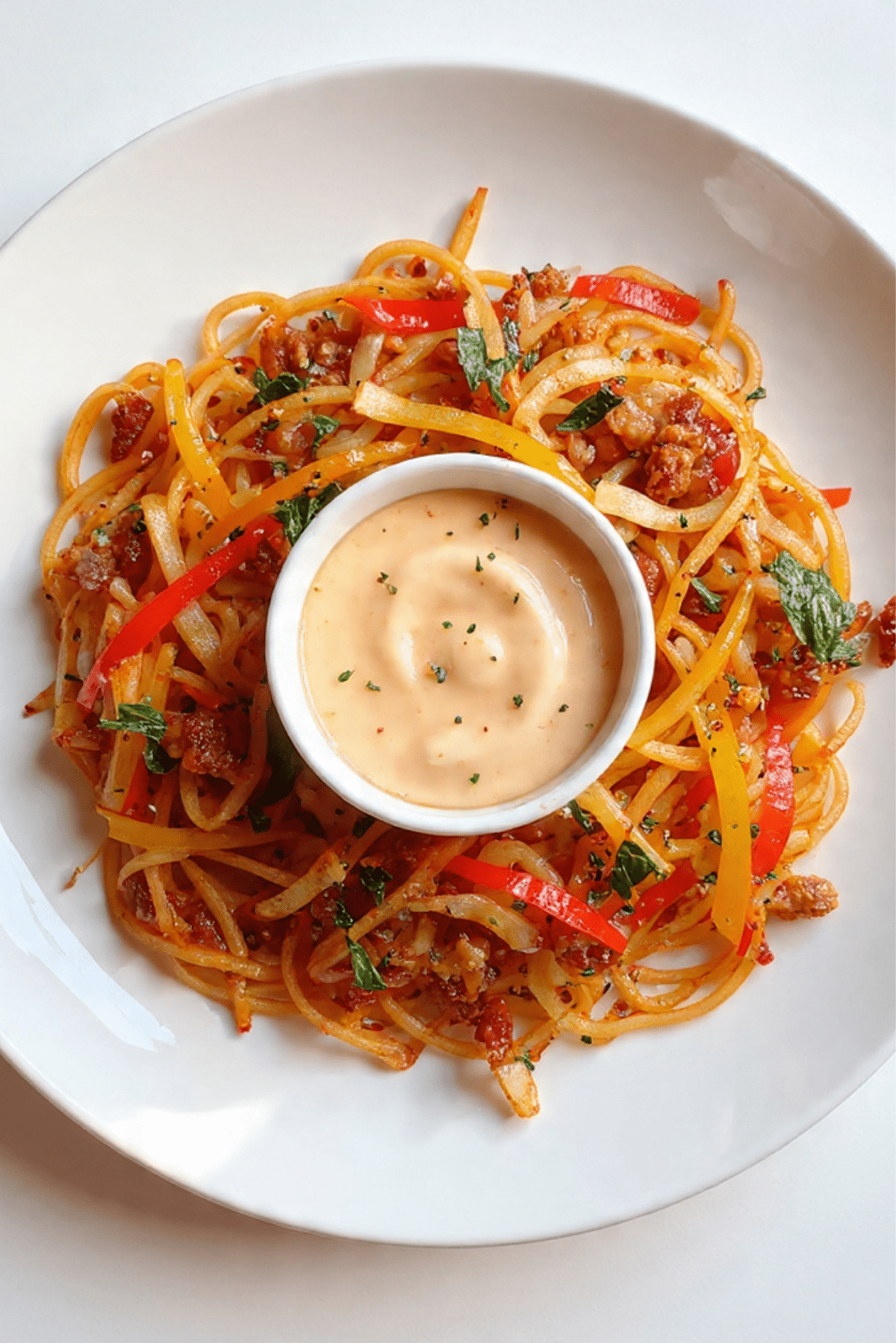
Pad Kee Mao (Drunken Noodles)
There’s something wildly comforting about a steamy plate of Pad Kee Mao. The glossy noodles, the punch of garlic and chili, the fresh basil dancing through it all — it’s a dish that grabs all your senses at once. The aromas alone are enough to make your stomach growl, and one bite will tell you this isn’t your average noodle bowl. It’s bold, it’s fragrant, it’s spicy in the best way, and every single ingredient brings something to the table.
Behind the Recipe
I still remember the first time I tried Pad Kee Mao at a tiny Thai place tucked behind a bookstore downtown. It was love at first bite. I asked the chef what made it so addictive, and he simply smiled and said, “Everything’s in balance — heat, sweet, salty, fresh.” I’ve been chasing that perfect balance ever since, and now, making it at home has become one of my favorite rituals. It’s the kind of recipe you return to again and again, especially on nights when you want something satisfying but fast.
Recipe Origin or Trivia
Pad Kee Mao is a popular street food in Thailand, and its name translates to “drunken noodles,” though there’s no alcohol in the recipe. It’s said the dish was created as a spicy cure for hangovers, which explains its intense flavor. It’s a close cousin to Pad See Ew, but where Pad See Ew is mild and sweet, Pad Kee Mao is fiery and full of herbs. Thai basil, garlic, fresh chili, and wide rice noodles come together to create a stir-fry that’s bold and irresistible.
Why You’ll Love Pad Kee Mao
Once you make this at home, you’ll understand why it’s a takeout favorite. Here’s why it deserves a spot in your rotation:
Versatile: Use tofu, chicken, shrimp, or whatever veggies you have on hand. It adapts beautifully.
Budget-Friendly: A handful of pantry staples and fresh veggies are all you need.
Quick and Easy: Ready in under 30 minutes, making it a perfect weeknight meal.
Customizable: Adjust the heat, add extra veggies, or swap in your favorite protein.
Crowd-Pleasing: Spicy, savory, and a little sweet — everyone loves it.
Make-Ahead Friendly: The sauce can be made in advance for even quicker meals.
Great for Leftovers: It reheats beautifully and might taste even better the next day.
Chef’s Pro Tips for Perfect Results
To really nail Pad Kee Mao, keep these tips in mind:
- Use day-old rice noodles or dry ones soaked ahead of time for the best texture.
- Stir-fry over high heat and work quickly to keep the veggies crisp and noodles chewy.
- Don’t skimp on Thai basil. It’s what gives the dish its signature aroma and taste.
- Slice everything ahead of time so you’re ready to go when the pan gets hot.
- Balance is key — taste and adjust sauce before adding to the wok.
Kitchen Tools You’ll Need
No fancy equipment needed here, just a few kitchen staples:
Wok or Large Skillet: For stir-frying at high heat without crowding.
Sharp Knife: For slicing tofu and vegetables cleanly and evenly.
Cutting Board: A sturdy surface to prep all your fresh ingredients.
Tongs or Spatula: Helps toss the noodles and keep everything moving.
Measuring Cups and Spoons: For getting the sauce just right.
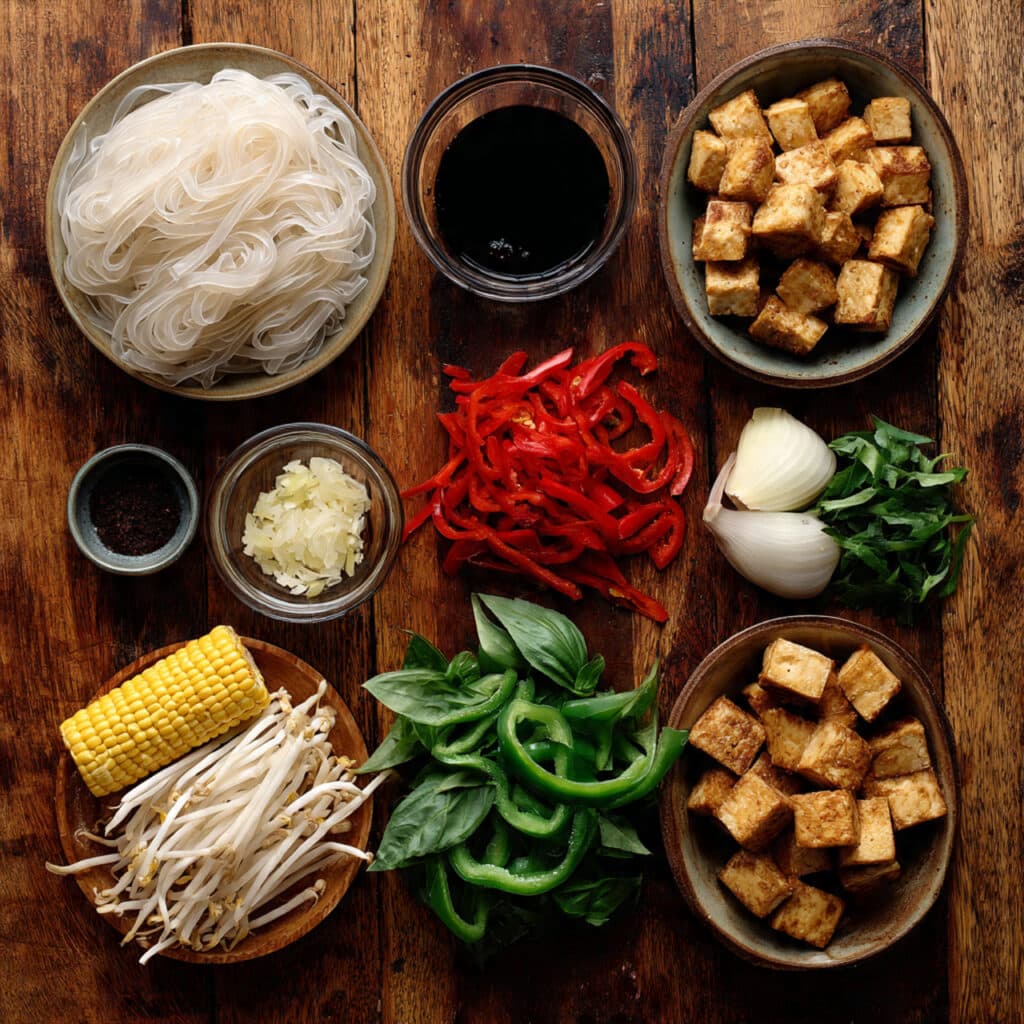
Ingredients in Pad Kee Mao
This is where the magic happens. Every component here plays a role in building bold, balanced flavor:
- Wide Rice Noodles: 8 ounces, fresh or soaked dry noodles that hold sauce and texture beautifully.
- Tofu (Firm): 1 block, cubed and pan-seared for a golden, satisfying bite.
- Thai Basil Leaves: 1 cup, added at the end for an herbal pop and aroma.
- Garlic: 5 cloves, minced for a pungent base flavor.
- Red Chilies (Bird’s Eye or Similar): 3, finely sliced for that iconic heat.
- Onion: 1 small, thinly sliced for sweetness and depth.
- Green Bell Pepper: 1, sliced into strips for crunch and color.
- Baby Corn: ½ cup, halved lengthwise for sweet crunch.
- Soy Sauce: 2 tablespoons, brings umami and salt.
- Dark Soy Sauce: 1 tablespoon, adds color and deeper flavor.
- Oyster Sauce: 1 tablespoon, for savory sweetness.
- Sugar: 1 teaspoon, balances the heat and saltiness.
- Oil (Neutral): 2 tablespoons, for stir-frying everything.
Ingredient Substitutions
Need to make a swap? No problem. Here are some flexible options:
Tofu: Chicken, shrimp, or tempeh.
Thai Basil: Sweet basil or holy basil.
Dark Soy Sauce: Double regular soy sauce for color.
Oyster Sauce: Mushroom sauce for a vegetarian option.
Red Chilies: Jalapeños or crushed red pepper flakes.
Ingredient Spotlight
Thai Basil: This is not your Italian basil. Thai basil has a peppery, slightly licorice-like flavor that shines in hot dishes.
Wide Rice Noodles: These chewy noodles soak up sauce like a sponge, making every bite flavorful and satisfying.
Instructions for Making Pad Kee Mao
Making Pad Kee Mao is a bit like a dance. Once the pan gets hot, everything happens fast — so have everything ready to go.
- Preheat Your Equipment:
Heat your wok or skillet over high heat until it’s just starting to smoke. - Combine Ingredients:
In a small bowl, mix soy sauce, dark soy sauce, oyster sauce, and sugar. Stir until dissolved. - Prepare Your Cooking Vessel:
Add oil to the hot wok, then toss in garlic and chilies. Sauté for 30 seconds until fragrant. - Assemble the Dish:
Add onions, bell pepper, and baby corn. Stir-fry for 2–3 minutes until slightly tender. - Cook to Perfection:
Add tofu and cooked rice noodles to the wok. Pour in the sauce and toss everything together until noodles are evenly coated. - Finishing Touches:
Turn off the heat and fold in Thai basil leaves until just wilted. - Serve and Enjoy:
Serve hot with a squeeze of lime or a dash of extra chili if you’re feeling bold.
Texture & Flavor Secrets
Pad Kee Mao hits every note — chewy noodles, crisp vegetables, creamy tofu, and bright basil. The sauce clings to every strand with a sweet, salty, and spicy punch that keeps you coming back for more.
Cooking Tips & Tricks
- Cook noodles until just tender. Overcooked noodles turn mushy fast.
- Add basil at the very end to keep its flavor fresh.
- Prep everything before heating your wok. This dish moves quickly.
- For extra protein, add a scrambled egg before the tofu.
What to Avoid
Everyone makes mistakes. Here’s how to steer clear of them:
- Don’t overcrowd the pan — it lowers the heat and causes steaming instead of frying.
- Avoid using dry basil or skipping it entirely. It’s essential for flavor.
- Never overcook the noodles — they’ll fall apart in the stir-fry.
Nutrition Facts
Servings: 2
Calories per serving: 520
Note: These are approximate values.
Preparation Time
Prep Time: 15 minutes
Cook Time: 10 minutes
Total Time: 25 minutes
Make-Ahead and Storage Tips
You can prep the sauce and chop veggies ahead of time, then store them in airtight containers in the fridge. Leftovers keep well for up to 3 days. Reheat gently in a skillet with a splash of water to loosen the noodles. You can also freeze it, though fresh is always best.
How to Serve Pad Kee Mao
Serve it piping hot with a wedge of lime on the side and extra chili for those who love the heat. Pair with Thai iced tea or a crisp cucumber salad to cool things down.
Creative Leftover Transformations
- Toss leftover noodles into a veggie-packed stir-fry the next day.
- Reheat with a fried egg on top for a spicy noodle breakfast.
- Wrap in lettuce leaves for a light, crunchy lunch.
Additional Tips
- Want more heat? Add chili oil or extra fresh chilies.
- Fresh ingredients matter here, especially the basil.
- A nonstick pan works if you don’t have a wok — just cook in batches.
Make It a Showstopper
Garnish with extra Thai basil and thin chili slices for color. Serve in a wide, shallow bowl so the noodles shine, and drizzle a touch of sauce over the top for that glossy finish.
Variations to Try
- Pad Kee Mao with Shrimp: Swap tofu for shrimp and cook just until pink.
- Vegan Drunken Noodles: Use mushroom sauce and double up on veggies.
- Extra Spicy Version: Add chili paste or more bird’s eye chilies.
- With Egg: Scramble an egg in the pan before adding noodles.
- Low-Carb Version: Try zucchini noodles or shirataki in place of rice noodles.
FAQ’s
Q1: Can I make Pad Kee Mao without Thai basil?
A1: You can, but it won’t have the same signature flavor. Use sweet basil as a last resort.
Q2: Is this dish always vegetarian?
A2: No, it’s often made with meat, but it’s easy to make a meatless version with tofu.
Q3: Can I use other noodles?
A3: Wide rice noodles are best, but you can try flat egg noodles or udon in a pinch.
Q4: How spicy is Pad Kee Mao?
A4: It’s medium to hot, but you can adjust the chili to your preference.
Q5: Can I double the recipe?
A5: Yes, but cook in batches to avoid overcrowding the pan.
Q6: What’s the difference between Pad Kee Mao and Pad See Ew?
A6: Pad Kee Mao is spicier and uses more herbs. Pad See Ew is milder and sweeter.
Q7: Can I add more vegetables?
A7: Absolutely. Broccoli, carrots, and mushrooms work great.
Q8: Does it taste good cold?
A8: It’s best hot, but cold leftovers are still tasty!
Q9: How long does it keep in the fridge?
A9: Up to 3 days in an airtight container.
Q10: Can I use low-sodium soy sauce?
A10: Yes. Just taste and adjust the saltiness with more or less soy sauce.
Conclusion
Pad Kee Mao is that rare dish that tastes like it took hours, but really comes together in under 30 minutes. With its bold flavors, chewy noodles, and spicy kick, it’s a meal that satisfies every craving. Trust me, you’re going to love this — and once you try it, you’ll be hooked for life.
Print
Pad Kee Mao (Drunken Noodles)
- Total Time: 25 minutes
- Yield: 2 servings 1x
- Diet: Vegetarian
Description
Pad Kee Mao, also known as drunken noodles, is a fiery Thai stir-fry packed with chewy rice noodles, crisp vegetables, tofu, and Thai basil. It’s bold, aromatic, and comes together in under 30 minutes.
Ingredients
- 8 ounces wide rice noodles
- 1 block firm tofu, cubed
- 1 cup Thai basil leaves
- 5 garlic cloves, minced
- 3 red chilies, sliced
- 1 small onion, sliced
- 1 green bell pepper, sliced
- 1/2 cup baby corn, halved
- 2 tablespoons soy sauce
- 1 tablespoon dark soy sauce
- 1 tablespoon oyster sauce
- 1 teaspoon sugar
- 2 tablespoons neutral oil
Instructions
- Heat your wok or skillet over high heat until hot.
- In a bowl, mix soy sauce, dark soy sauce, oyster sauce, and sugar. Set aside.
- Add oil to the wok, then garlic and chilies. Stir-fry for 30 seconds.
- Add onion, bell pepper, and baby corn. Cook for 2–3 minutes.
- Add tofu and cooked rice noodles. Pour in sauce and toss everything well.
- Turn off heat and fold in Thai basil until just wilted.
- Serve hot with optional lime or chili garnish.
Notes
- Use day-old noodles for the best texture.
- Prep all ingredients before you start cooking — it moves fast.
- Add extra chili for more heat or use sweet basil if Thai basil is unavailable.
- Prep Time: 15 minutes
- Cook Time: 10 minutes
- Category: Main Course
- Method: Stir-Fry
- Cuisine: Thai
Nutrition
- Serving Size: 1 bowl
- Calories: 520
- Sugar: 6g
- Sodium: 920mg
- Fat: 18g
- Saturated Fat: 2g
- Unsaturated Fat: 14g
- Trans Fat: 0g
- Carbohydrates: 70g
- Fiber: 5g
- Protein: 20g
- Cholesterol: 0mg
Keywords: Pad Kee Mao, drunken noodles, Thai noodle stir fry, spicy vegetarian noodles, Thai basil noodles