
Portuguese Egg Tarts (Pastéis de Nata)
Warm, flaky, custardy, and kissed with just a touch of caramelized sweetness — that’s what a perfect Portuguese Egg Tart tastes like. Whether you’ve strolled through Lisbon’s winding alleys or only dreamt of it, one bite of a fresh pastel de nata transports you straight to a sunny bakery window in Portugal.
Behind the Recipe
This recipe is more than just dessert. It’s an homage to the little tart that stole my heart on a trip to Lisbon. I remember holding a warm pastel de nata, still nestled in its parchment wrapper, with cinnamon and powdered sugar offered on the side. It was crisp, creamy, and utterly addictive. Recreating it at home became a mission — a delicious mission that’s now one of my favorite weekend bakes.
Recipe Origin or Trivia
The Pastéis de Nata have a long, delicious history that began in the 18th century at the Jerónimos Monastery in Belém, Lisbon. Back then, monks used egg whites for starching clothes, leaving them with an excess of egg yolks. Naturally, they turned to baking. What came out of their ovens was a heavenly combination of crispy pastry and silky egg custard. Today, you’ll find these tarts all over Portugal, and around the world, thanks to their unmistakable charm.
Why You’ll Love Portuguese Egg Tarts (Pastéis de Nata)
These little beauties are truly irresistible. Here’s why:
Versatile: Perfect with coffee, as an afternoon snack, or served warm for dessert.
Budget-Friendly: Uses everyday ingredients that are already in your kitchen.
Quick and Easy: Especially if you use store-bought puff pastry.
Customizable: Add a dash of cinnamon or lemon zest for your own signature twist.
Crowd-Pleasing: Watch them disappear in seconds at brunch or potlucks.
Make-Ahead Friendly: Custard and pastry can be prepped ahead and baked fresh.
Great for Leftovers: Reheat in the oven and they’re just as magical the next day.
Chef’s Pro Tips for Perfect Results
Getting that bakery-level texture is easier than you think. Follow these for success:
- Keep the puff pastry cold so it stays flaky when baked.
- Use a metal muffin tin for a crisper crust than silicone.
- Don’t overcook the custard on the stove — it should be just thickened.
- Let the tarts rest in the pan after baking to firm up.
- Dust with cinnamon and powdered sugar right before serving for authenticity.
Kitchen Tools You’ll Need
Before you get whisking, here’s what you’ll want nearby.
Muffin Tin: To shape and bake the tarts.
Rolling Pin: For thinning and shaping your puff pastry.
Saucepan: To gently heat and thicken the custard.
Whisk: For smooth, lump-free custard.
Fine Mesh Sieve: To strain the custard for silky results.
Cooling Rack: Helps the tarts cool without getting soggy bottoms.
Ingredients in Portuguese Egg Tarts (Pastéis de Nata)
Each element has a purpose, and together they create a dessert that’s both humble and luxurious.
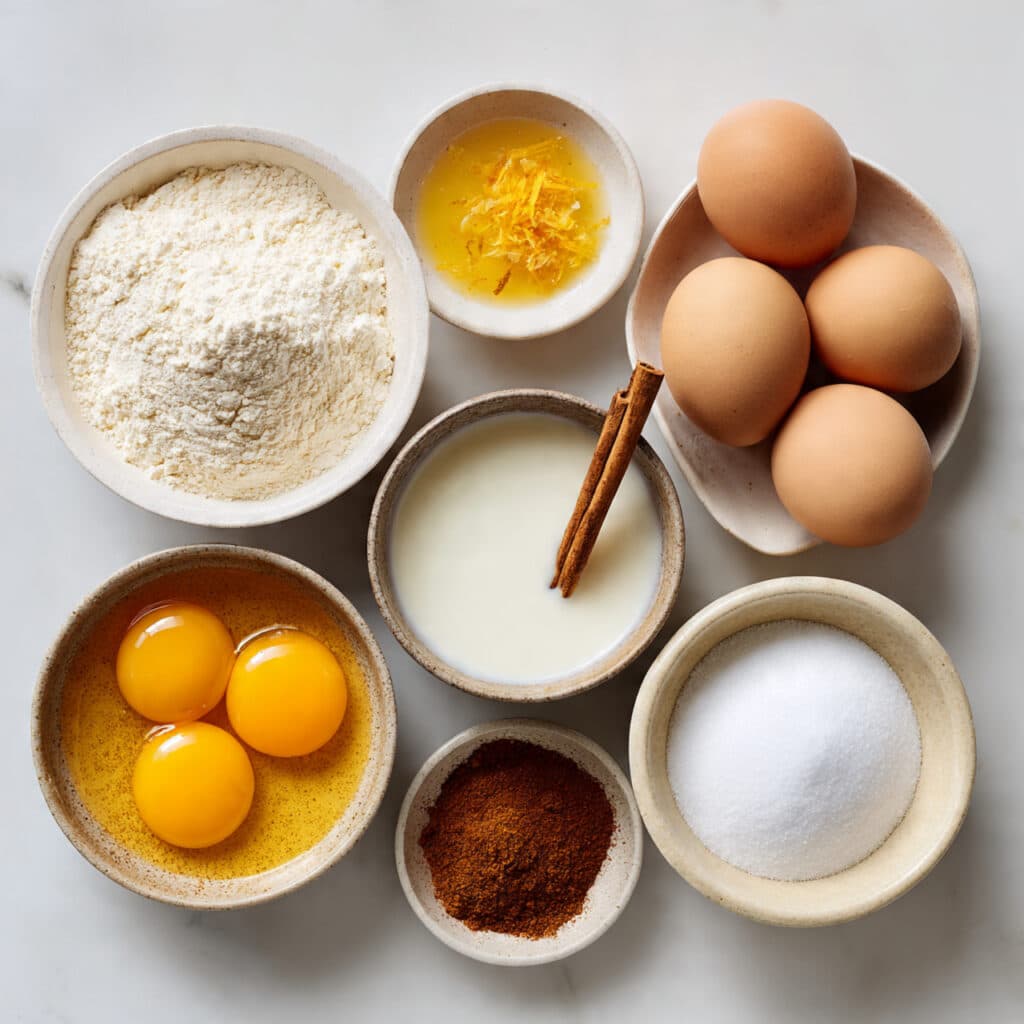
- Puff Pastry Sheets: 1 package (thawed if frozen). Forms the crisp, flaky tart shell.
- Egg Yolks: 6 large. Creates the rich, golden custard base.
- Whole Milk: 1 cup. Provides creaminess without being too heavy.
- Heavy Cream: ½ cup. Adds richness and smooth texture.
- Granulated Sugar: ¾ cup. Sweetens and helps with caramelization.
- Vanilla Extract: 1 teaspoon. Enhances the custard flavor.
- Cornstarch: 2 tablespoons. Thickens the custard gently without making it stiff.
- Lemon Peel (optional): From 1 lemon. Adds brightness and balance to the custard.
- Cinnamon Stick (optional): 1 stick. Infuses warm spice into the custard base.
- Powdered Sugar and Ground Cinnamon: For sprinkling before serving.
Ingredient Substitutions
Here are a few easy swaps if you need them:
Puff Pastry Sheets: Use homemade if you’re feeling ambitious.
Whole Milk: Substitute with any full-fat milk alternative.
Heavy Cream: Use evaporated milk in a pinch.
Cornstarch: Arrowroot powder works just as well.
Vanilla Extract: Vanilla bean paste for a deeper, speckled flavor.
Ingredient Spotlight
Puff Pastry: The key to that signature crunch. The layers expand and crisp up in the oven, creating the iconic shell.
Egg Yolks: Deliver color, flavor, and the luscious texture you expect from a true pastel de nata.
Instructions for Making Portuguese Egg Tarts (Pastéis de Nata)
This process is surprisingly soothing — and the results are incredibly rewarding.
- Preheat Your Equipment:
Preheat oven to 500°F (260°C). Grease a 12-cup metal muffin tin lightly with butter. - Combine Ingredients:
In a saucepan, combine milk, cream, lemon peel, and cinnamon stick. Heat gently until warm but not boiling. In a bowl, whisk sugar, cornstarch, egg yolks, and vanilla. Slowly pour warm milk mixture over yolks while whisking. Return to heat and cook until slightly thickened. Strain and set aside to cool. - Prepare Your Cooking Vessel:
Roll out the puff pastry sheet into a thin rectangle. Roll it tightly into a log, then slice into 12 rounds. Press each round into the muffin tin, using your thumbs to stretch the dough up the sides. - Assemble the Dish:
Fill each pastry cup with custard, about ¾ full. - Cook to Perfection:
Bake for 14–16 minutes or until tops are blistered and caramelized, and pastry is golden. Remove from oven and let cool in pan for 5 minutes. - Finishing Touches:
Transfer tarts to a wire rack. Dust with cinnamon and powdered sugar once cooled slightly. - Serve and Enjoy:
Best served warm or room temperature with a strong coffee or espresso.
Texture & Flavor Secrets
The contrast is everything — crispy, buttery pastry and a creamy, smooth custard that jiggles just right. The blistered top adds a faint caramel note, while a sprinkle of cinnamon gives a warm, nostalgic aroma.
Cooking Tips & Tricks
- Chill your custard before filling if you’re not baking right away.
- For best flakiness, keep pastry as cold as possible until it hits the oven.
- Rotate the pan halfway through baking for even browning.
What to Avoid
Watch out for these common mistakes:
- Don’t overbake — the custard should still have a slight wobble.
- Avoid overfilling the cups or it’ll spill and stick.
- Don’t use silicone molds — they won’t crisp the base enough.
Nutrition Facts
Servings: 12
Calories per serving: 225
Note: These are approximate values.
Preparation Time
Prep Time: 30 minutes
Cook Time: 16 minutes
Total Time: 46 minutes
Make-Ahead and Storage Tips
You can make the custard up to 2 days ahead and store in the fridge. Assemble and bake fresh when ready. Baked tarts can be stored in the fridge in an airtight container for up to 3 days. Reheat in a 350°F oven for 5–8 minutes to revive the crispness.
How to Serve Portuguese Egg Tarts (Pastéis de Nata)
Serve warm with a generous dusting of powdered sugar and a light sprinkle of cinnamon. Pair with coffee, strong black tea, or even a sweet dessert wine if you like. For a brunch spread, they add a sophisticated European touch.
Creative Leftover Transformations
If you’ve somehow got extras, try these:
- Crumble into vanilla yogurt with fruit for a quick parfait.
- Slice and toast them lightly for a crunchy custard twist.
- Cut in half and fill with whipped cream or berries for a new dessert.
Additional Tips
- Use a thermometer if needed — custard should reach 170–175°F.
- For more blistered tops, broil for 1–2 minutes at the end of baking.
- Add a pinch of nutmeg for a Portuguese-American flavor fusion.
Make It a Showstopper
Serve on a vintage ceramic plate with lace doilies for an old-world bakery vibe. Garnish the plate with lemon slices or a cinnamon stick for a pretty presentation.
Variations to Try
- Chocolate Custard: Add 2 tablespoons cocoa powder to the custard.
- Lemon Zest: Boost citrus flavor with extra zest in the base.
- Vanilla Bean: Swap extract for seeds from a real vanilla pod.
- Berry Swirl: Drop a bit of berry compote into the custard before baking.
- Caramelized Sugar Top: Sprinkle sugar before baking for an extra crunchy top.
FAQ’s
Q1: Can I use pre-made puff pastry?
Yes, store-bought works great and saves time.
Q2: Can I freeze them?
They’re best fresh, but you can freeze them and reheat in the oven.
Q3: Can I make them in advance?
Yes. Make the custard ahead and bake day-of for best results.
Q4: How do I keep them crispy?
Cool on a wire rack and avoid storing in airtight containers while still warm.
Q5: Why is my custard runny?
It may not have thickened enough. Cook until it lightly coats a spoon.
Q6: Can I make them gluten-free?
Use gluten-free puff pastry if available.
Q7: Can I reduce the sugar?
Yes, but keep some for the classic caramelized top.
Q8: Do I need to strain the custard?
Yes, to remove any cooked egg bits for a silky texture.
Q9: How do I get the blistered tops?
Bake at high temp and optionally broil briefly at the end.
Q10: What’s the best way to serve them?
Warm, dusted with powdered sugar and cinnamon.
Conclusion
Portuguese Egg Tarts are a bite-sized taste of Lisbon in your own kitchen. With their golden flaky crusts and creamy custard centers, they’re an easy way to bring a little elegance and comfort to your day. Whether you’re making them for guests or just for yourself, trust me — these are worth every step. Now go on and give them a try. You might just find yourself baking a second batch.
Print
Portuguese Egg Tarts (Pastéis de Nata)
- Total Time: 46 minutes
- Yield: 12 tarts
- Diet: Vegetarian
Description
A beloved Portuguese pastry with a crisp, flaky shell and silky-smooth custard filling, Pastéis de Nata are sweet, creamy, and perfectly caramelized on top. Serve warm with cinnamon and powdered sugar for an authentic bite of Lisbon.
Ingredients
- Puff Pastry Sheets: 1 package – Forms the crisp tart shell
- Egg Yolks: 6 large – Creates the golden custard
- Whole Milk: 1 cup – Adds creaminess
- Heavy Cream: ½ cup – Makes the custard rich and smooth
- Granulated Sugar: ¾ cup – Sweetens and helps with caramelization
- Vanilla Extract: 1 teaspoon – Enhances flavor
- Cornstarch: 2 tablespoons – Gently thickens the custard
- Lemon Peel (optional): From 1 lemon – Adds brightness
- Cinnamon Stick (optional): 1 stick – Adds warmth to the custard
- Powdered Sugar and Ground Cinnamon: For sprinkling before serving
Instructions
- Preheat Your Equipment: Preheat oven to 500°F (260°C). Lightly grease a 12-cup metal muffin tin.
- Combine Ingredients: Heat milk, cream, lemon peel, and cinnamon stick in a saucepan. Whisk sugar, cornstarch, egg yolks, and vanilla in a bowl. Pour warm milk into yolk mixture, whisking constantly. Return to heat and cook until slightly thickened. Strain and cool.
- Prepare Your Cooking Vessel: Roll out puff pastry into a thin rectangle and roll into a log. Slice into 12 pieces and press each into muffin cups.
- Assemble the Dish: Fill pastry cups ¾ full with custard.
- Cook to Perfection: Bake for 14–16 minutes until tops blister and pastry is golden. Cool in pan 5 minutes.
- Finishing Touches: Transfer to wire rack and dust with cinnamon and powdered sugar.
- Serve and Enjoy: Serve warm or at room temperature.
Notes
- Use a metal muffin tin for crisper crusts.
- Chill pastry and custard before assembling if preparing ahead.
- Rotate pan halfway through baking for even browning.
- Prep Time: 30 minutes
- Cook Time: 16 minutes
- Category: Dessert
- Method: Baking
- Cuisine: Portuguese
Nutrition
- Serving Size: 1 tart
- Calories: 225
- Sugar: 17g
- Sodium: 110mg
- Fat: 14g
- Saturated Fat: 6g
- Unsaturated Fat: 7g
- Trans Fat: 0g
- Carbohydrates: 22g
- Fiber: 0g
- Protein: 3g
- Cholesterol: 120mg
Keywords: pastéis de nata, Portuguese egg tarts, custard tarts, flaky tart, Lisbon dessert