Tahdig (Crispy Persian Rice)
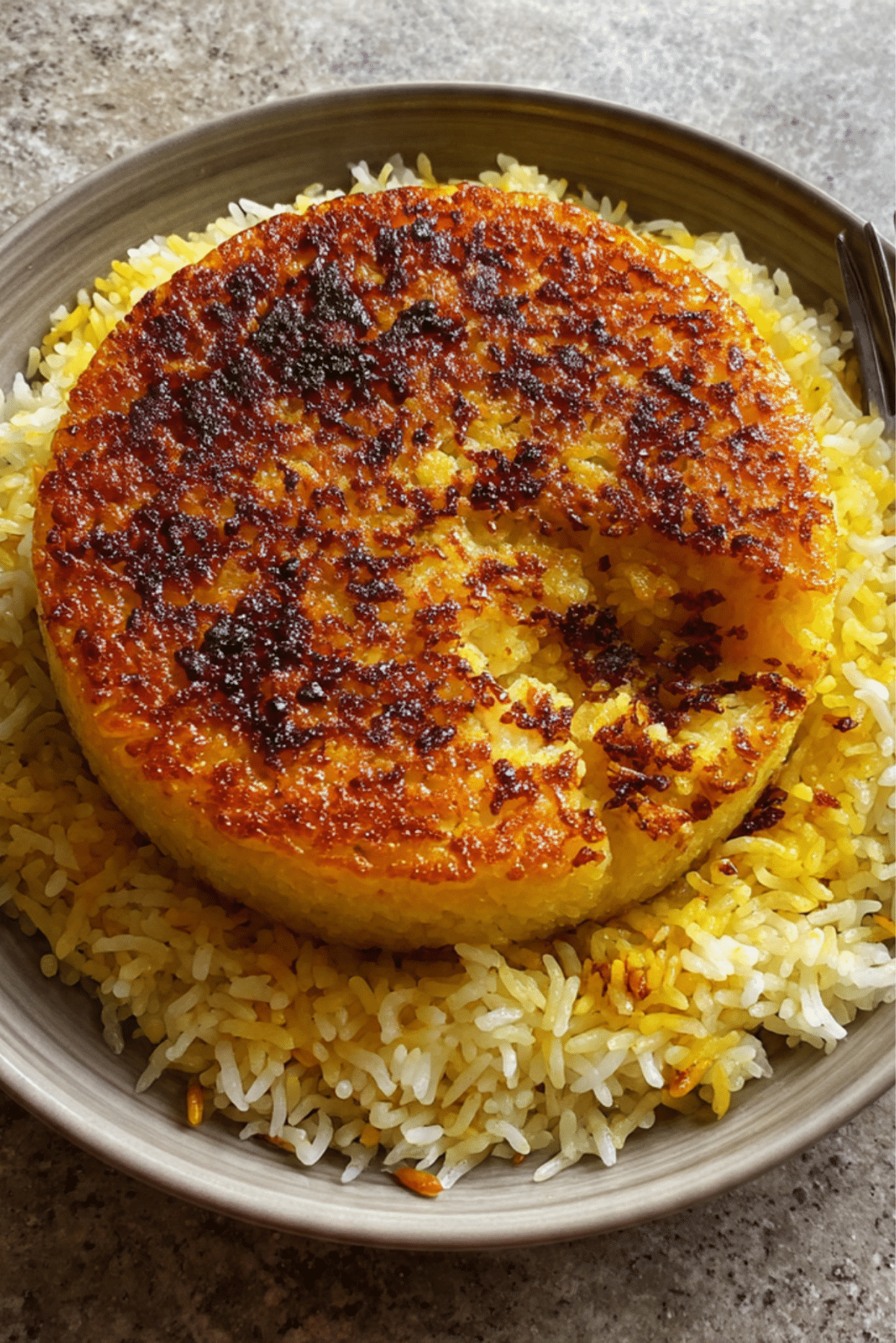
If there’s one dish that turns heads at every Persian table, it’s Tahdig. That golden, crispy crust of rice, crackling as it’s lifted from the pan, is a celebration in itself. The scent of saffron rising in the steam, the satisfying crunch with each bite, and the way it pairs with just about everything makes it a true culinary treasure. Trust me, once you master Tahdig, it’ll become the crown jewel of your rice game.
Behind the Recipe
I remember the first time I flipped a pot and unveiled my first proper Tahdig. My hands were shaking a little, heart pounding, and then—crunch. That perfect golden crust slid out in one glorious piece. It took me back to gatherings with family, where the biggest argument was always about who got the largest piece. There’s something magical about taking something as humble as rice and turning it into a crispy, golden masterpiece.
Recipe Origin or Trivia
Tahdig comes from Persian cuisine, where rice isn’t just a side—it’s an art form. The word Tahdig literally means “bottom of the pot” in Farsi. This delicacy was traditionally a sign of a skilled cook, and though it looks simple, creating that flawless crust takes a balance of heat, timing, and love. You’ll find variations throughout Iran, with some families using bread or potato slices instead of rice for the base. No matter the method, it’s always a showstopper.
Why You’ll Love Tahdig
This crispy rice has more than just good looks going for it. Let’s break down why it deserves a spot on your table:
Versatile:
Serve it alongside stews, grilled meats, or enjoy it solo with yogurt and herbs.
Budget-Friendly:
Simple ingredients like rice, oil, and saffron turn into a luxurious experience.
Quick and Easy:
Once you get the hang of it, it’s just rinse, boil, steam, and crisp.
Customizable:
Use lavash bread or thinly sliced potatoes at the bottom for different textures.
Crowd-Pleasing:
Guests always ask how it’s made—it steals the spotlight.
Make-Ahead Friendly:
Prepare ahead, then crisp right before serving for maximum wow factor.
Great for Leftovers:
If there’s any left, reheat in a skillet for next-day crunch that still delivers.
Chef’s Pro Tips for Perfect Results
Getting Tahdig just right is all about mastering the process. Here are my best secrets:
- Use a nonstick pan or well-seasoned cast iron. This helps ensure that beautiful crust slides out effortlessly.
- Steam is your friend. After boiling and draining the rice, steaming it with a towel-wrapped lid traps moisture and finishes the cooking gently.
- Don’t rush the crust. Low and slow heat allows the bottom to turn golden without burning.
- Saffron bloom matters. Always bloom saffron in warm water to unlock its full color and aroma.
- Flip with confidence. Place a plate over the pan, take a breath, and invert quickly for a clean release.
Kitchen Tools You’ll Need
Making Tahdig is simple in theory, but having the right tools makes it easier.
Nonstick or Cast Iron Pan:
Essential for releasing that crust intact.
Large Pot:
For boiling and par-cooking the rice.
Fine Mesh Strainer:
To rinse and drain the rice properly.
Kitchen Towel or Paper Towel Lid Wrap:
Keeps steam in during final cooking.
Flat Serving Plate:
Use one larger than the pan for an easy flip.
Ingredients in Tahdig
The magic starts with a few pantry staples and a little bit of technique. Here’s what you’ll need:
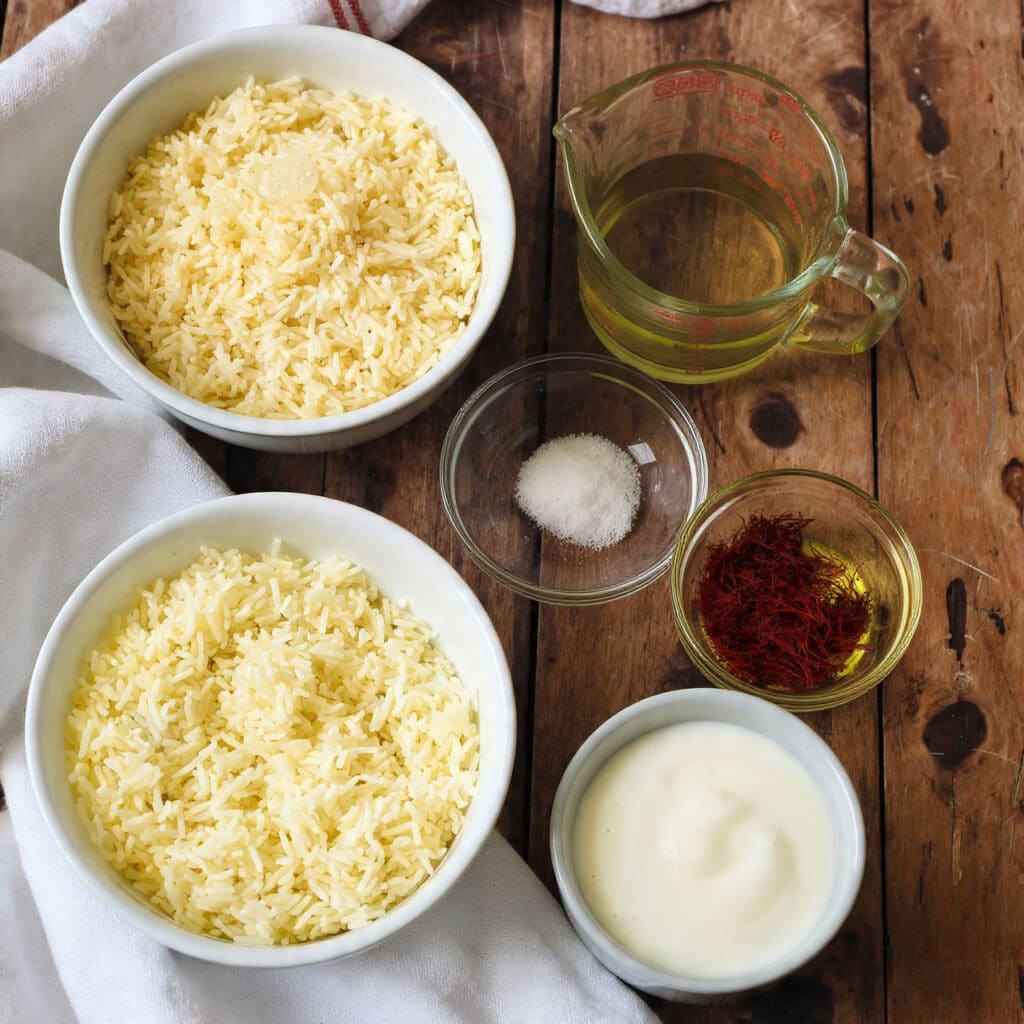
- Basmati Rice: 2 cups
This aromatic long-grain rice fluffs beautifully and crisps like a dream. - Salt: 1 tablespoon
For seasoning the boiling water and infusing the rice with flavor. - Saffron Threads: 1/4 teaspoon
Bloomed in warm water to give that signature golden hue and floral aroma. - Water: As needed
For boiling the rice and blooming saffron. - Oil or Butter: 1/4 cup
Helps form that crispy golden crust on the bottom. - Plain Yogurt (optional): 2 tablespoons
Mixed with a bit of rice to form an extra golden and rich crust.
Ingredient Substitutions
If you’re out of something, don’t worry. Here are some smart swaps:
Basmati Rice: Jasmine rice will work, but the texture may vary slightly.
Saffron: A small pinch of turmeric can mimic color, but the flavor will differ.
Oil or Butter: Use ghee for a richer, nuttier taste.
Yogurt: Skip if dairy-free or use plant-based alternatives.
Ingredient Spotlight
Saffron:
Known as the most expensive spice in the world, saffron brings not just a bold golden color but also a delicate floral aroma that defines Persian rice.
Basmati Rice:
Its long, slender grains cook up fluffy and separate, perfect for steaming and crisping into that iconic Tahdig texture.
Instructions for Making Tahdig
This process is like a little kitchen ritual, and once you do it a few times, it becomes second nature. Let’s walk through it:
- Preheat Your Equipment:
Bring a large pot of water to a rolling boil with salt. Meanwhile, bloom saffron in 2 tablespoons of warm water. - Combine Ingredients:
Rinse rice under cold water until it runs clear. Add rice to boiling water and cook for 6 to 7 minutes until just al dente. Drain and set aside. - Prepare Your Cooking Vessel:
In a nonstick or cast iron pan, heat oil or butter over medium heat. If using yogurt, mix a scoop of parboiled rice with yogurt and a bit of saffron and spread it over the bottom of the pan. - Assemble the Dish:
Gently mound the rest of the rice into the pan, shaping it like a pyramid to allow steam to circulate. Drizzle saffron water over the top for that gorgeous golden finish. - Cook to Perfection:
Cover the lid with a kitchen towel, secure it, and place it on the pan. Reduce heat to low and cook for 30 to 40 minutes. Don’t peek—the steam needs to stay trapped. - Finishing Touches:
Once done, let it rest for 5 minutes. Run a spatula around the edges to loosen. Place a plate over the pan and quickly invert to reveal the crispy crust. - Serve and Enjoy:
Serve immediately. Watch as everyone dives in for that prized crispy layer first.
Texture & Flavor Secrets
What makes Tahdig unforgettable is the contrast. The bottom is rich, golden, and shatteringly crisp, while the interior is soft and aromatic. The saffron brings warmth and floral notes, and the buttery or oily crust adds depth. Every bite is a play of textures and flavors that feel both comforting and luxurious.
Cooking Tips & Tricks
Some little details make a big difference:
- Always rinse your rice until the water is clear to avoid stickiness.
- Use a towel-wrapped lid to trap steam and keep the rice fluffy.
- Rotate your pan occasionally to avoid hot spots.
- If your crust resists flipping, let it sit off heat for 2 minutes—it may release on its own.
What to Avoid
Don’t let a few common mistakes ruin your crispy masterpiece:
- Using too high heat—it’ll burn the crust before the inside steams.
- Skipping the steam step—your rice won’t finish cooking properly.
- Not using enough oil—it’s essential for crisping and flavor.
- Peeking too soon—let the crust form in peace!
Nutrition Facts
Servings: 4
Calories per serving: 310
Note: These are approximate values.
Preparation Time
Prep Time: 15 minutes
Cook Time: 40 minutes
Total Time: 55 minutes
Make-Ahead and Storage Tips
You can easily prepare Tahdig ahead. Boil and drain the rice earlier in the day, then assemble and crisp just before serving. Leftovers? Reheat in a skillet for a second-day crunch. Avoid microwaving, as it softens the crust. You can also freeze portions, then crisp them in the oven to bring back the texture.
How to Serve Tahdig
Tahdig shines on any Persian spread. Pair it with stews like Ghormeh Sabzi or Fesenjan, or serve it with grilled vegetables and yogurt dips. Garnish with fresh herbs or barberries for a beautiful pop of color and tang.
Creative Leftover Transformations
Tahdig doesn’t last long, but if it does:
- Crispy Rice Bites: Reheat pieces and top with herbed yogurt.
- Persian Rice Frittata: Mix leftovers with eggs and herbs, then pan-fry.
- Rice Croutons: Cube it and toast for salads or soups.
Additional Tips
- Add a pinch of turmeric for extra golden color.
- You can layer potato slices at the bottom for a variation.
- Adding a dollop of yogurt or ghee makes the crust extra rich and flavorful.
Make It a Showstopper
Presentation is part of the charm. Flip it onto a white or patterned serving plate for a dramatic reveal. Sprinkle with a few saffron threads or chopped herbs for elegance. A side of pickled veggies or a drizzle of garlic yogurt makes the dish complete.
Variations to Try
- Potato Tahdig: Layer thin potato slices on the bottom before adding rice.
- Bread Tahdig: Use lavash bread soaked in oil for a flaky crust.
- Herbed Tahdig: Mix fresh dill or parsley into the rice for a green speckled look.
- Yogurt Tahdig: Mix yogurt and egg yolk with rice for a richer base.
- Barberry Saffron Tahdig: Add barberries to saffron water for a sweet-sour surprise.
FAQ’s
Q1: Can I use short grain rice?
A1: You can, but it won’t give the same fluffy texture and crispy bottom as basmati.
Q2: What’s the secret to flipping without breaking it?
A2: Let the crust rest for a few minutes off heat, loosen with a spatula, then invert confidently.
Q3: Can I make it dairy-free?
A3: Yes, skip the yogurt and use oil or plant-based butter.
Q4: How do I know when the crust is ready?
A4: You’ll hear a faint crackling sound and smell a nutty, toasty aroma.
Q5: Do I need to soak the rice before boiling?
A5: Soaking helps soften the grains, but it’s optional for Tahdig.
Q6: What’s the best oil to use?
A6: Neutral oils like sunflower or vegetable oil work best.
Q7: Why is my Tahdig sticking?
A7: It could be too little oil or high heat. Try using a nonstick pan.
Q8: Can I add spices to the rice?
A8: Absolutely! A pinch of turmeric or cumin adds lovely depth.
Q9: How do I reheat leftovers?
A9: Skillet reheat is best to preserve crunch.
Q10: Can I make it in advance?
A10: Yes, par-cook rice ahead and crisp before serving.
Conclusion
Making Tahdig is like uncovering a hidden gem at the bottom of your rice pot. It’s crispy, golden, and full of rich, aromatic flavor. Once you try it, you’ll understand why it steals the show every time. Give it a go, and let me tell you, it’s worth every bite.
Print
Tahdig (Crispy Persian Rice)
- Total Time: 55 minutes
- Yield: 4 servings
- Diet: Vegetarian
Description
Tahdig is a beloved Persian dish known for its crispy golden crust and fluffy saffron rice. It’s a celebration of textures and flavors that turns simple ingredients into a show-stopping centerpiece.
Ingredients
- Basmati Rice: 2 cups
- Salt: 1 tablespoon
- Saffron Threads: 1/4 teaspoon
- Water: As needed
- Oil or Butter: 1/4 cup
- Plain Yogurt (optional): 2 tablespoons
Instructions
- Bring a large pot of salted water to a boil. Rinse rice under cold water until the water runs clear. Bloom saffron in 2 tablespoons of warm water.
- Add rice to boiling water and cook for 6 to 7 minutes until just al dente. Drain and set aside.
- Heat oil or butter in a nonstick or cast iron pan over medium heat. If using, mix some rice with yogurt and saffron water and spread it at the bottom of the pan.
- Gently add the remaining rice, shaping it like a dome. Drizzle saffron water over the top.
- Cover the lid with a towel, place on the pan, reduce heat to low, and cook for 30 to 40 minutes without peeking.
- Remove from heat and let rest for 5 minutes. Loosen edges with a spatula, place a plate over the pan, and flip to release the Tahdig.
- Serve immediately and enjoy the crispy, golden crust.
Notes
- Use a nonstick or cast iron pan for the best release.
- Do not rush the cooking time, low and slow heat is key.
- If Tahdig doesn’t release easily, let it rest off heat for a few minutes.
- Try layering with potato slices or lavash bread for variations.
- Prep Time: 15 minutes
- Cook Time: 40 minutes
- Category: Main Course
- Method: Stovetop
- Cuisine: Persian
Nutrition
- Serving Size: 1 portion
- Calories: 310
- Sugar: 0g
- Sodium: 400mg
- Fat: 12g
- Saturated Fat: 4g
- Unsaturated Fat: 8g
- Trans Fat: 0g
- Carbohydrates: 45g
- Fiber: 1g
- Protein: 5g
- Cholesterol: 10mg
Keywords: Tahdig, Persian crispy rice, saffron rice, Iranian food, stovetop rice, golden crust rice